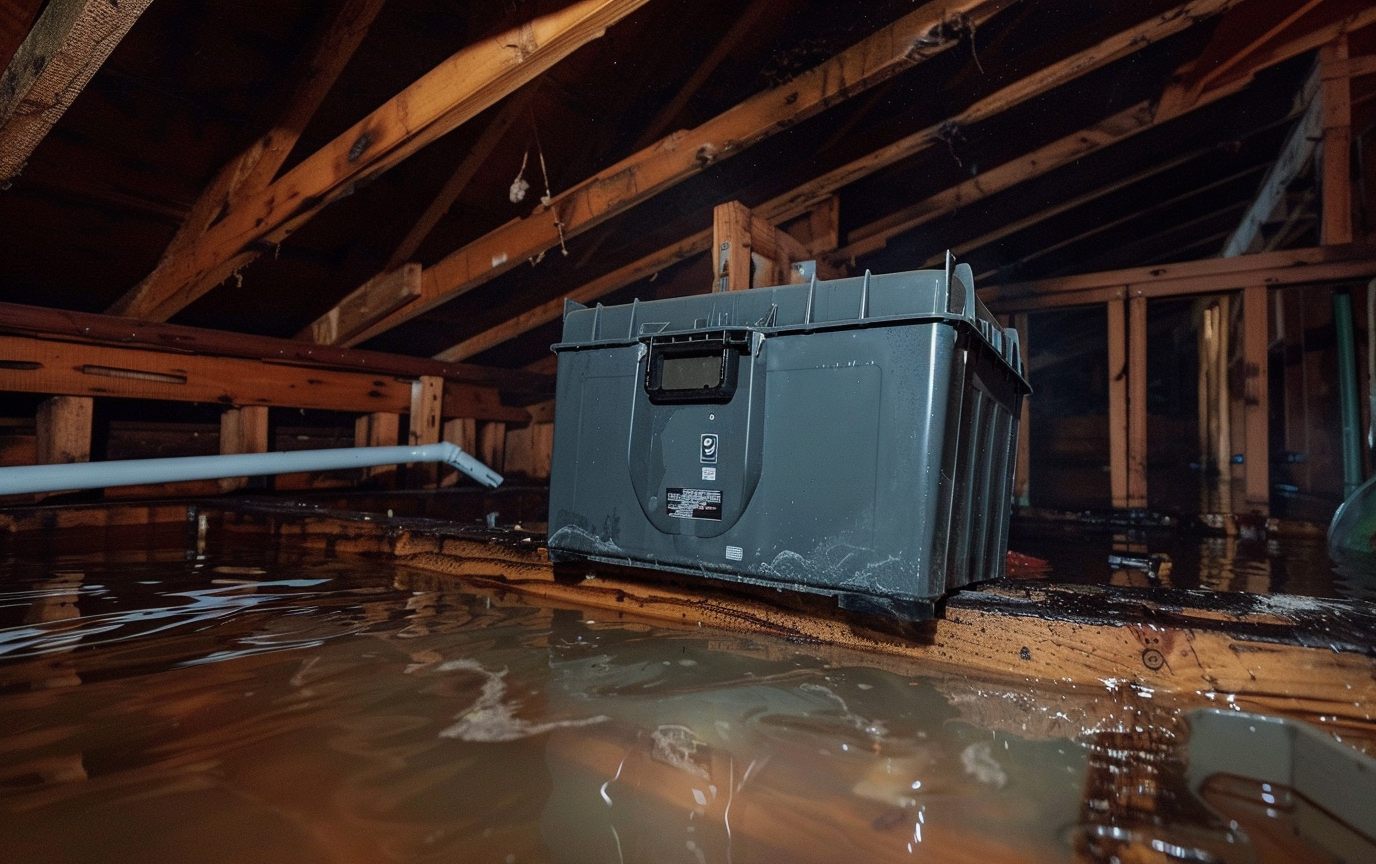
In much of the country, the furnace and water heater live in a basement. In Central Texas, they're often over your head. Most Kyle homes have the air handler in the attic, and many have the water heater up there too. That puts gallons of water a day, and a pressurized tank, above the bedroom ceilings. When something goes wrong, the leak comes down through the insulation and the drywall. This guide explains how attic systems work, how they fail and how to spot trouble early.
How the AC Makes Water
An air conditioner cools by pulling heat and moisture out of the air. In a humid Kyle summer, the indoor coil can condense several gallons of water a day. That water drips into a pan under the coil and drains through a PVC line, usually to the outside near the foundation or into a plumbing drain.
| Part | What it does | Common failure |
|---|---|---|
| Primary pan | Catches condensate under the coil | Rusts, cracks or tilts |
| Primary drain line | Carries water out | Clogs with algae, sludge or insulation debris |
| Secondary pan | Sits under the whole unit as backup | Fills silently and overflows, or rusts through |
| Secondary line or float switch | Drains the backup pan, or shuts the AC off when it fills | Missing, unplugged, or draining somewhere no one sees |
A "condensation leak in the ceiling" almost always means one of those parts failed.
The Signs of an AC Drain Problem
- water dripping from a ceiling vent or around the return
- a stain spreading near the attic access or under the air handler
- the AC shutting off unexpectedly (a float switch tripping)
- water dripping from a pipe over a window outside, which is the secondary drain telling you the primary is clogged
- a musty smell from the vents
If you see water near a vent, switch the AC off at the thermostat. That stops new condensate.
Water Heaters in the Attic
A tank water heater holds 40 to 50 gallons or more and stays connected to the supply, so it keeps feeding water if it fails.
| Sign | What it may mean |
|---|---|
| Rust at the base of the tank | Corrosion working through |
| Water in the pan | A slow leak, or the relief valve discharging |
| Rusty hot water | The tank lining failing |
| Popping or rumbling | Sediment build-up |
| A tank around ten years old or more | Nearing the end of its typical life |
If the tank is leaking, shut off the cold-water valve on top and turn off the power or gas.
Water dripping from the attic?
Tell a Kyle restoration company what you're seeing: (737) 265-3450.
Call (737) 265-3450Why Attic Leaks Do So Much Damage
- Insulation soaks it up. Blown-in insulation holds water against the ceiling drywall over a wide area.
- Nobody looks. A slow drip can run for weeks before a stain shows.
- Heat and humidity. Summer attics keep wet materials wet.
- Gravity. Everything below is living space.
What the Cleanup Involves
Readings in the attic and on the ceiling below, removal of wet insulation, opening the saturated ceiling section, drying both spaces, and then new insulation, drywall, texture and paint. Full detail: attic AC & water heater leaks.
Preventing the Next One
- keep the condensate line flushed, especially before summer
- make sure a float switch or secondary drain is in place and working
- look at the pans and the base of the water heater a few times a year
- know where the water heater's shutoff valve is
- keep the attic access clear so problems can be checked
Where the Water Goes Once It Overflows
An overflowing pan sends water across the attic floor, which is really the top of your ceiling drywall covered in insulation. The water spreads until it finds a seam, a light fixture, a vent boot or the lowest point, and comes through there. That's why a single overflow can stain a ceiling several feet from the air handler and soak insulation over a wide area.
A Simple Summer Check
Once a month in summer, if you can get into the attic safely, look at the air handler pan with a flashlight. Dry is good. Standing water means the primary drain is struggling. Also check that the condensate line outside is dripping when the AC runs; no drip on a humid day is a clue something's blocked.
Questions
Why is my AC leaking water through the ceiling?
Usually a clogged condensate line, a cracked or rusted pan, or a secondary pan that filled and overflowed.
Is a leaking attic water heater an emergency?
It can be. The tank keeps refilling from the supply. Shut off the cold-water valve and the power or gas, then call.
Will insurance cover an attic AC leak?
Sudden water damage is often covered, but long-term leaks and wear often aren't. See Texas homeowners insurance and burst pipes.
Around Kyle
Attic mechanicals are standard in Plum Creek, Southlake Ranch and Kensington Trails.

Water Leaking From the Ceiling: What It Usually Means
The four usual sources, and how to tell them apart.

Water Damage in a Newer Home
Why houses only a few years old still leak, and what to check.