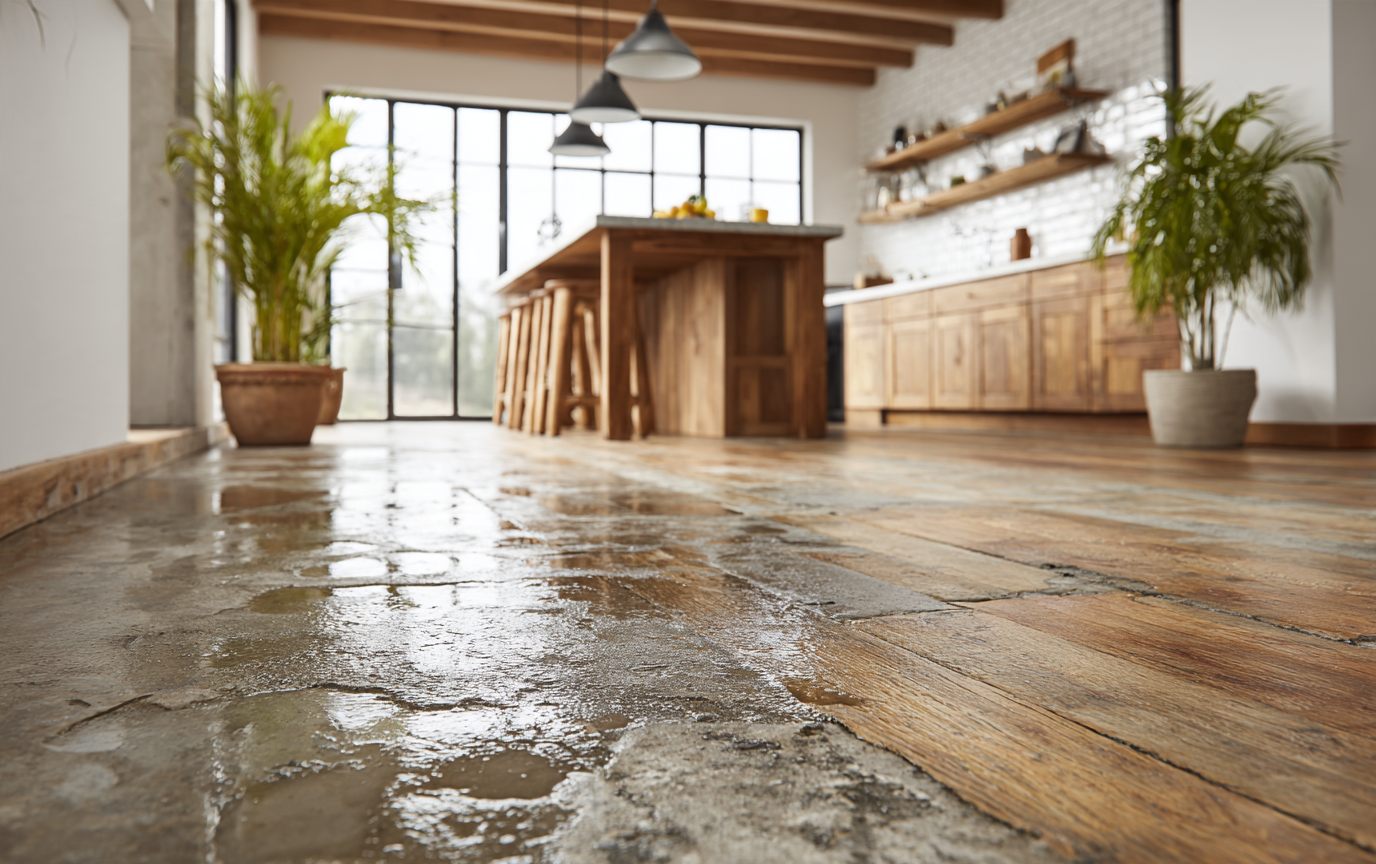
Most Kyle homes sit on a concrete slab poured directly on the ground, with water lines running underneath or within it. That's a practical way to build in Central Texas, but it hides a particular kind of water damage: the slab leak. Water escapes under the concrete, and the first you know of it is a warm floor, a damp baseboard or a water bill that doesn't make sense. This guide explains what happens under the slab, why clay soil matters and what to look for.
What a Slab Leak Is
A slab leak is a leak in a water supply line, or sometimes a drain line, beneath or inside the concrete foundation. Lines can fail from corrosion, from abrasion where a pipe rubs against concrete or gravel, from poor installation, or from movement in the soil and slab. Hot-water lines tend to fail more often, partly from expansion and contraction.
Why Clay Soil Matters
Much of the ground around Kyle is expansive clay. It swells when it's wet and shrinks when it's dry, so the soil under a house moves with the seasons and with drought. That movement stresses slabs and the pipes in them. A leak can also make things worse: water from a leaking line wets the soil under one part of the house, changing how it supports the slab there.
Signs of a Slab Leak
| Sign | Why it happens |
|---|---|
| A warm or hot spot on the floor | A leaking hot-water line under the slab |
| Sound of running water with all fixtures off | Water escaping under pressure |
| A water bill that suddenly rises | Water running all the time |
| Damp carpet or swollen laminate with no visible source | Water rising through the slab |
| Wet baseboards along an interior wall | Water wicking up from the slab edge |
| New cracks in tile or drywall, sticking doors | Soil and slab movement |
| The water meter moving with everything off | A leak somewhere on your side of the meter |
Checking the meter is a simple test: turn off every fixture and appliance, then watch the meter for movement.
Warm spot on the floor, or a bill that jumped?
Get the water damage assessed: (737) 265-3450.
Call (737) 265-3450What Water Damage It Causes
- swollen laminate and vinyl plank, which often has to come up
- wet carpet pad and tack strip
- soaked baseboards and the bottom of drywall
- cabinets with wet bases
- a slab that stays damp for a long time
What the Work Involves
The leaking line has to be found and repaired, which is a separate part of the job. The water damage work is to extract any standing water, lift wet flooring so the slab can dry, remove swollen baseboards and wet drywall bottoms, and dry the slab and walls with equipment and readings. New flooring should go down only after the slab reads dry. Full detail: burst pipes & slab leaks.
Foundations and Insurance
Insurance treatment varies. Many homeowners policies cover sudden water damage from a slab leak, and some cover the cost of accessing the line. Others limit or exclude parts of it, and foundation repair from soil movement is often excluded. Read your policy and ask your agent. More: Texas homeowners insurance and burst pipes.
Hot Water Lines and Slab Leaks
Hot-water lines under a slab expand and contract every time hot water runs, and that movement, plus rubbing against concrete or gravel, wears pipes over time. That's one reason a warm spot on a tile floor is such a classic slab-leak sign. A leaking hot-water line can also make the water heater run more often than usual, which can show up on the energy bill as well as the water bill.
Drainage and Clay
Keeping soil moisture steady around a slab helps on expansive clay: gutters and downspouts that carry water away, yards graded away from the house, and no long periods of bone-dry soil right against the foundation in drought. None of that prevents a pipe from failing, but it reduces the soil movement that stresses slabs and lines.
Questions
How do I know if I have a slab leak?
Look for a warm spot on the floor, the sound of running water, a jump in the water bill, or damp flooring with no visible source. A meter test helps confirm a leak somewhere.
Is a slab leak an emergency?
It's not usually a flood, but it keeps running and keeps soaking the slab and flooring. The sooner it's found, the less flooring and drywall has to come out.
Will my floors have to come up?
Laminate and vinyl plank usually do, so the slab can dry. Tile often stays. Carpet pad usually goes.
Around Kyle
Slab homes on clay are the norm in Four Seasons Farm, Bunton Creek and Uhland.
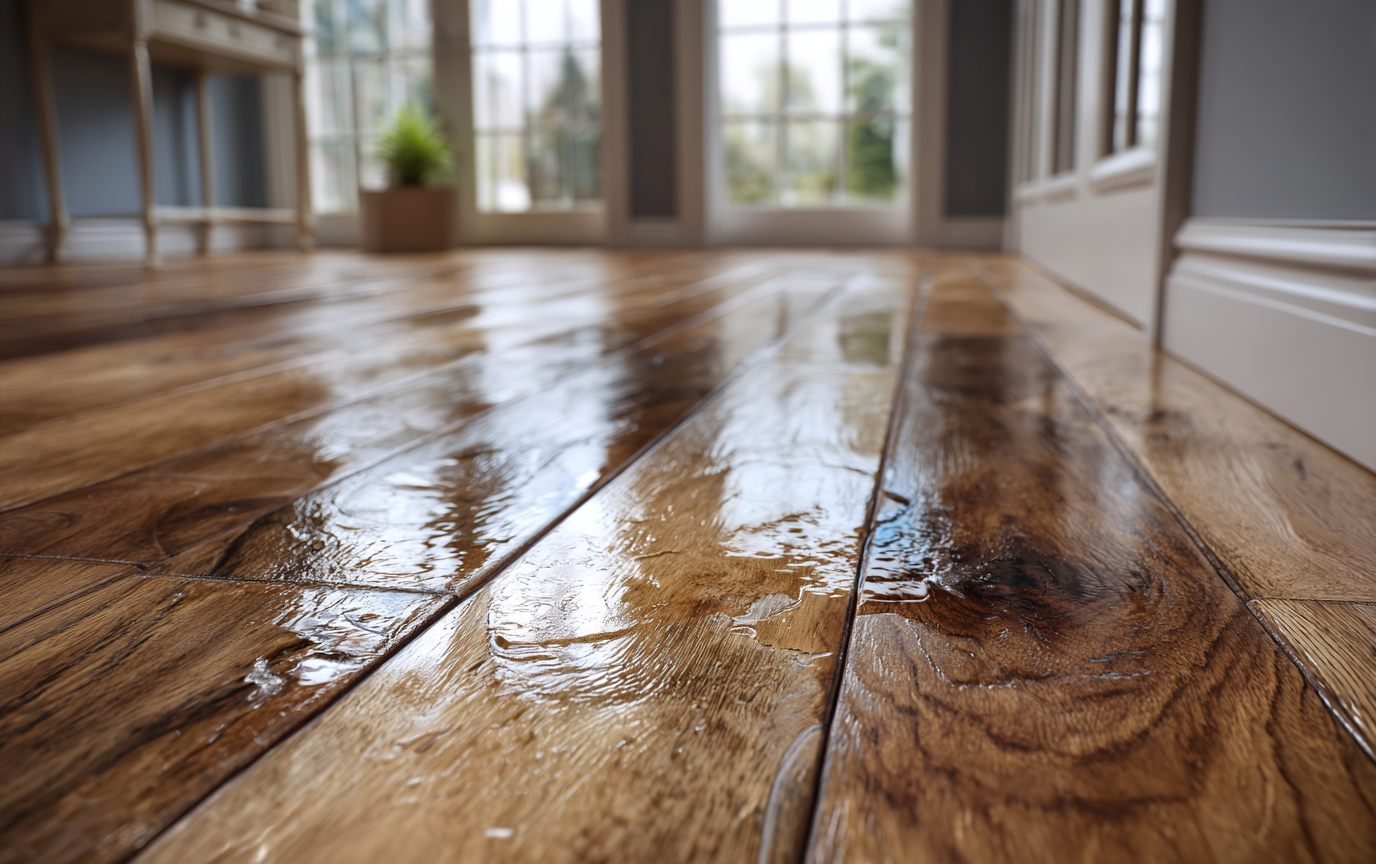
Hardwood, Laminate and Carpet After a Leak
What usually stays, what goes, and why the slab matters.

Texas Homeowners Insurance and Burst Pipes
What's usually covered, what isn't, and the records that help.