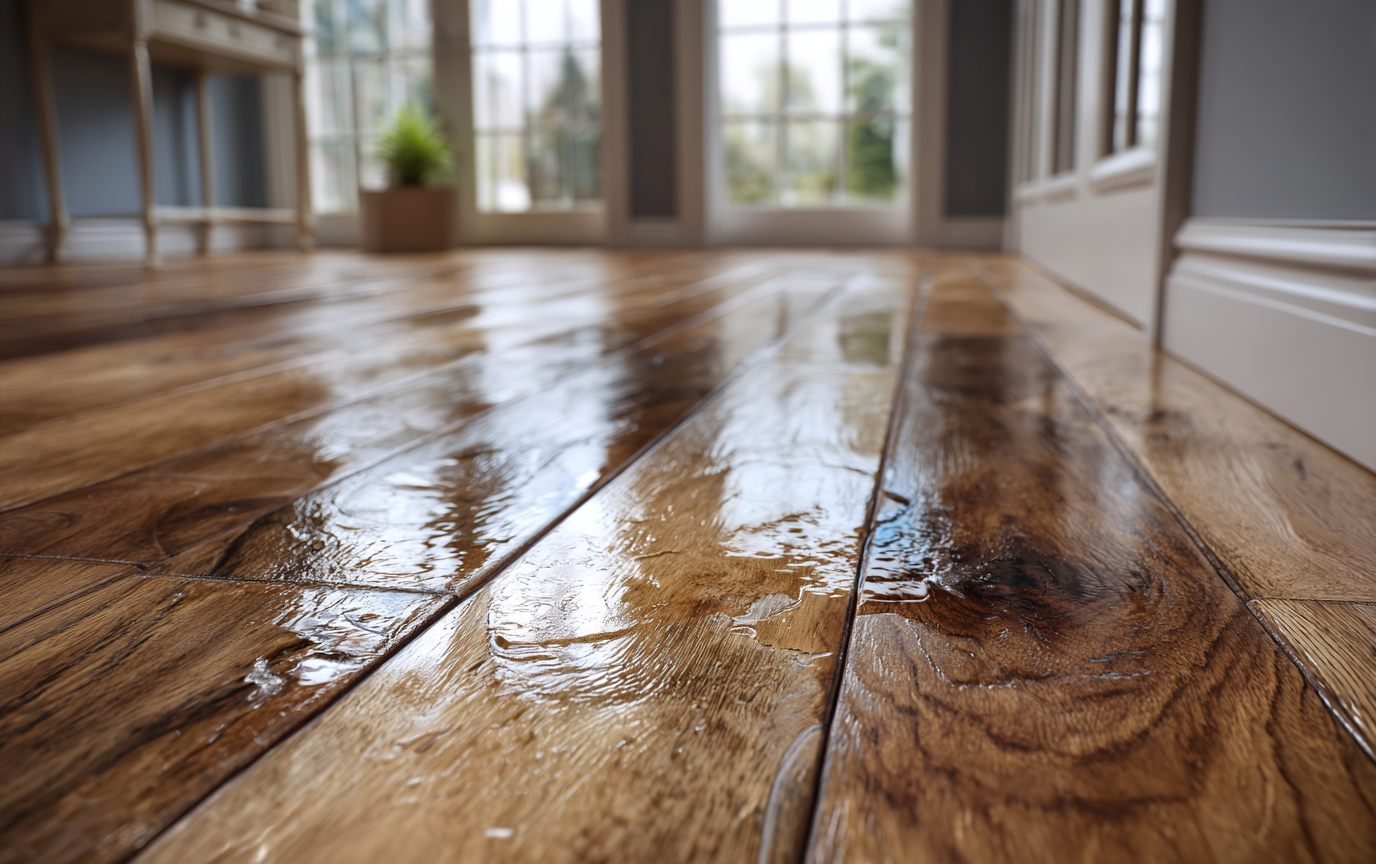
In a Kyle home, the floor is where most water damage ends up. Houses sit on concrete slabs, so water from a leak spreads sideways across the slab under whatever flooring is on top. Some floors survive that; some don't. And the slab itself holds moisture long after the surface seems dry. This guide goes through the common flooring types, what usually happens to each and why the slab readings matter as much as the floor.
Floor by Floor
| Flooring | What water does | What usually happens |
|---|---|---|
| Laminate | Gets into the seams and swells the fiberboard core | Swollen planks usually replaced; can't be dried back flat |
| Vinyl plank (LVP) | Waterproof on top, but water sits underneath on the slab | Often lifted so the slab can dry, then reinstalled or replaced |
| Engineered wood | The plywood core can delaminate | Sometimes dried; replaced if it delaminates or cups badly |
| Solid hardwood | Cups as it absorbs water, may crown later | Often dried slowly with mats; sanded or replaced if damage remains |
| Ceramic or porcelain tile | Doesn't absorb much; grout and the slab do | Usually stays; grout and slab dried |
| Carpet and pad | The pad soaks like a sponge | Pad replaced; carpet sometimes dried and relaid after clean water |
Why Water Seeps Through the Laminate Floor
When water seems to seep up through laminate, it's already underneath, on the slab, from a nearby leak, a slab leak or water that came in at a door. Laminate's locking edges let water in and then hold it. The source has to be found, then the planks lifted so the slab can dry. Leaving them down traps the water.
The Slab Under It All
Concrete absorbs water and gives it up slowly. A slab can read dry on the surface and still hold moisture deeper down. New flooring laid over a damp slab can cup, turn musty underneath or lose its adhesive. That's why restoration companies take slab readings and dry the slab before any new flooring goes in, even when the old floor was waterproof.
The First Hours Matter for Floors
- Clean water caught early gives hardwood and carpet the best chance.
- Water that sat for days usually means laminate, pad and baseboards come out.
- Dirty or outside water means carpet and pad go, and hard surfaces get cleaned.
Matching and Replacing
Replacing part of a floor often runs into matching problems: a laminate pattern that's discontinued, hardwood that has aged to a different color, or a floor that runs continuously through several rooms. Ask the restoration company and your insurer how matching is handled before the old flooring goes to the curb, and keep a sample.
What You Can Do Right Away
- stop the water source
- move furniture and rugs off the wet floor; put foil or blocks under legs that can't move
- photograph the floor before anything is lifted
- don't pull up wet carpet or laminate yourself, since it can damage what might be saved
Tack Strip, Pad and Baseboards
Under wall-to-wall carpet, the tack strip around the room edges is nailed or glued to the slab and soaks up water. It's usually replaced along with the pad. Baseboards, especially MDF, swell from the bottom and rarely recover. These are small items, but they're on almost every water damage scope in a carpeted slab home.
Drying a Slab
Concrete gives up water slowly. Restoration companies may use dehumidifiers, air movers aimed across the surface and sometimes specialty mats to pull moisture out. Drying stops when slab readings reach an acceptable level for the flooring going back down, not when the surface looks dry. Ask what reading the company is aiming for.
Questions
Can laminate be dried and saved?
Rarely, once the core has swollen. Laminate that got only surface water and was wiped up quickly sometimes survives.
Is vinyl plank waterproof?
The planks are, but water still runs underneath and sits on the slab. They're often lifted so the slab can dry.
Can water-damaged hardwood be fixed?
Often, if it's dried slowly and the cupping settles. Boards that stay cupped or split may be sanded or replaced.
Around Kyle
Laminate and vinyl plank over slab are the standard in Bunton Creek and Lockhart's newer edges. More: walls, drywall & floors.
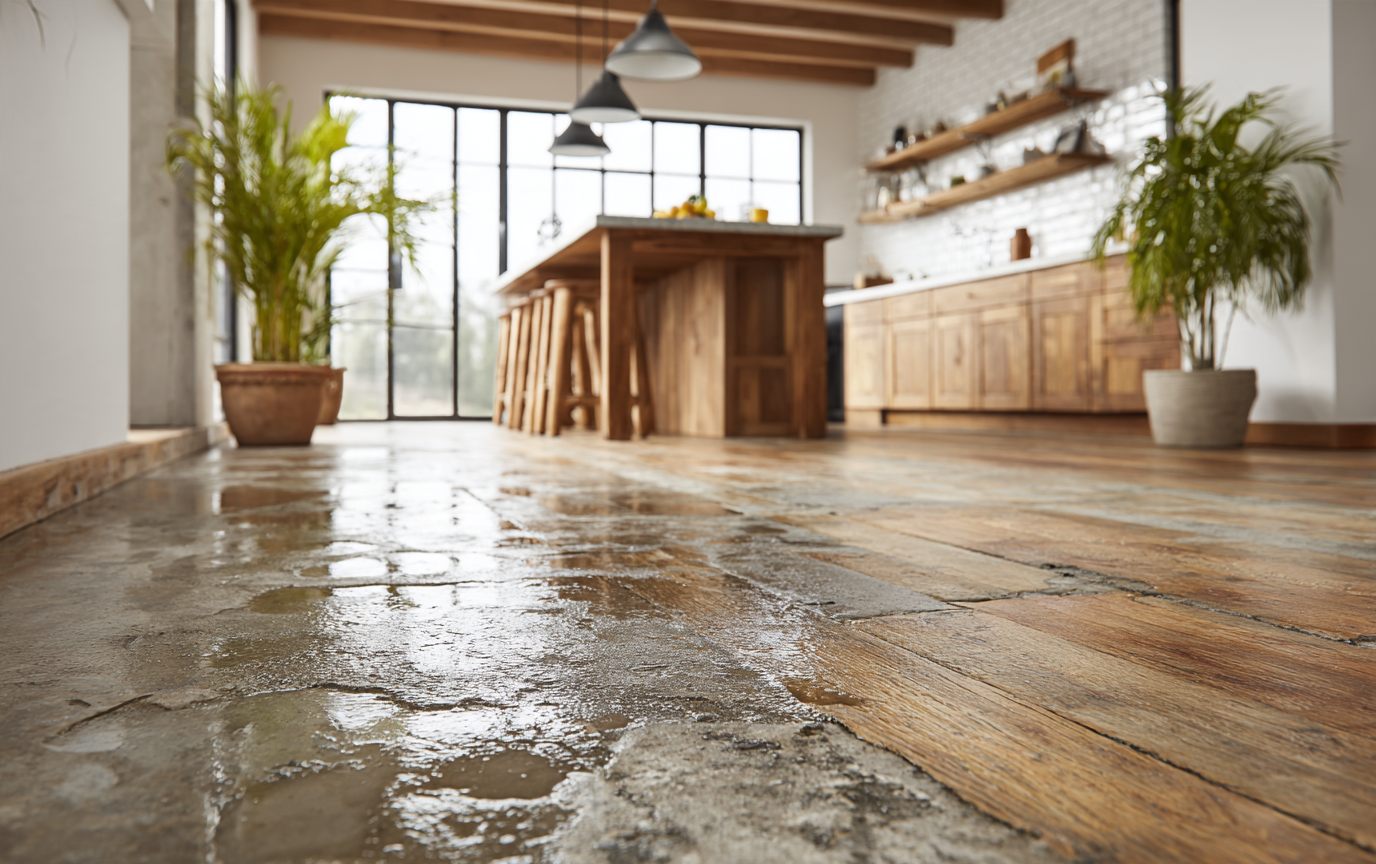
Slab Leaks and Foundation Water Damage on Clay Soil
What happens under the slab, and the signs on top of it.
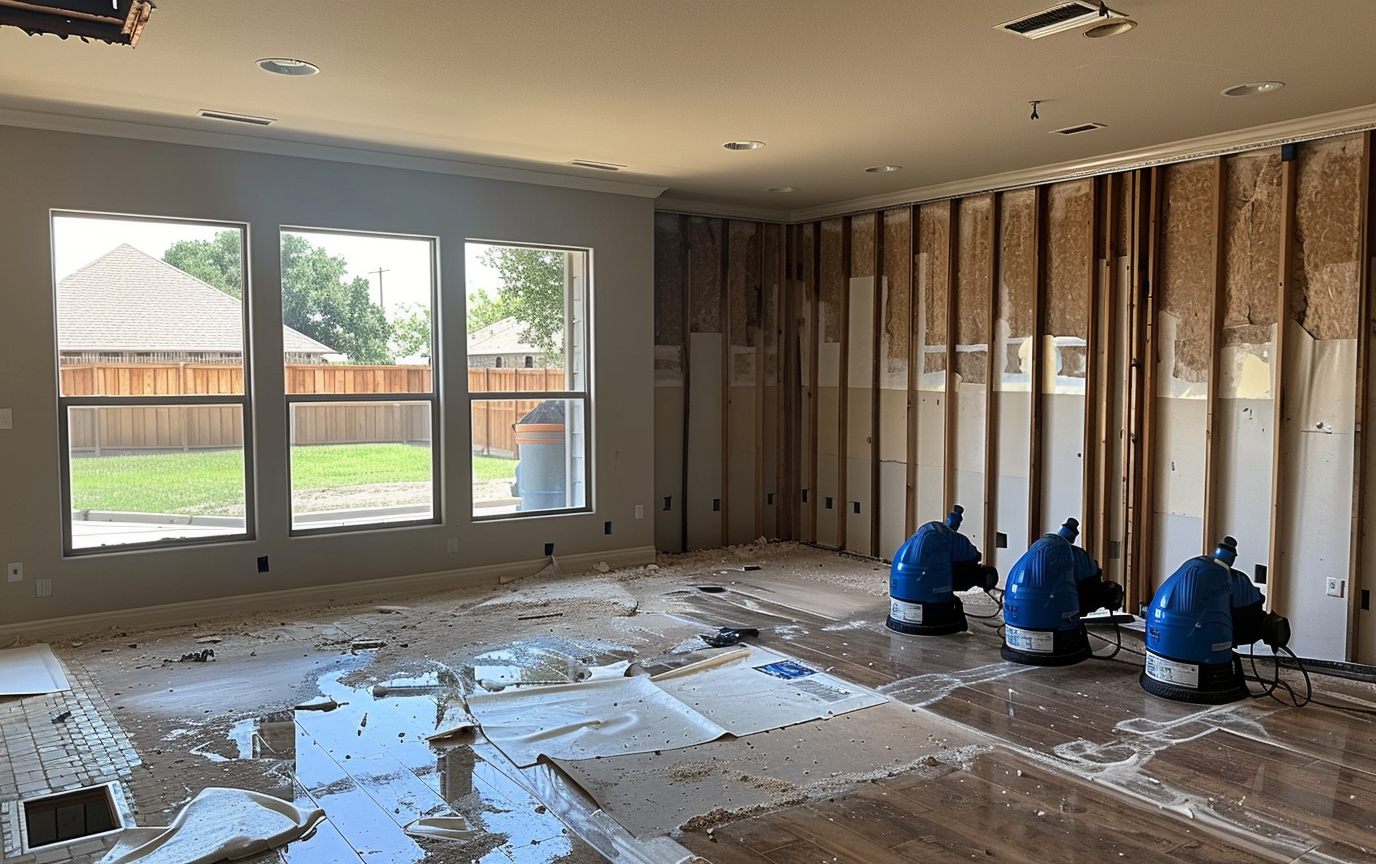
Water Inside Walls: Signs and What Happens Next
The clues before the stain, and how walls get dried.