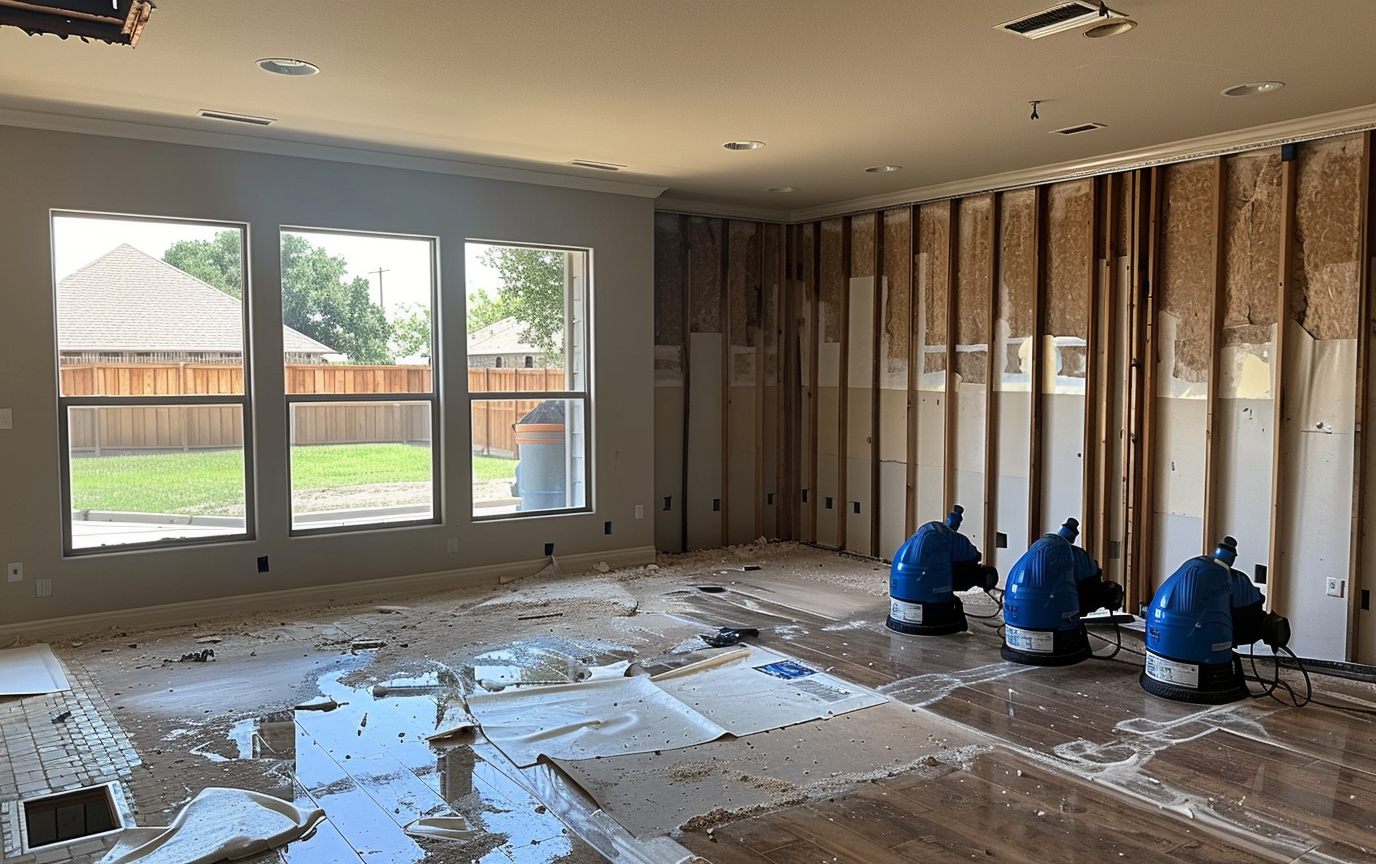
People ask what water damage repair costs, and the honest answer is that it depends on a handful of things nobody can see until the moisture is mapped. Two Kyle homes with "a wet floor" can end up with very different bills. This guide explains the factors so you can follow a restoration company's scope and compare two of them. It doesn't give prices; those are set by the company after looking at the damage.
The Main Factors
| Factor | Smaller bill | Bigger bill |
|---|---|---|
| Area | One room | Several rooms, two floors, the attic |
| Water type | Clean supply-line water | Gray or contaminated water |
| Time before work | Found and stopped quickly | Sat for days, or ran for weeks |
| Materials | Tile, sealed concrete | Laminate, hardwood, carpet, drywall, cabinets |
| Hidden spread | Stayed on the surface | In wall cavities, under the slab edge, in attic insulation |
| Access | Open rooms | Attics, closets, under cabinets |
| Drying days | A few | A week or more (slabs, hardwood) |
| Repair scope | Paint and baseboard | Drywall, flooring and cabinets |
How the Bill Is Usually Itemized
Restoration bills are usually line items, not a lump sum:
- emergency service and setup
- water extraction, by area
- removal of wet materials (pad, baseboards, drywall, insulation)
- drying equipment, counted per machine per day
- monitoring visits and moisture readings
- cleaning or antimicrobial treatment where needed
- repairs: drywall, texture, paint, flooring, trim, often as a separate scope
Itemized is good. It means you can check each line against what was done.
Why Ceilings, Walls and Floors Cost What They Do
Ceilings cost more when the attic insulation is soaked, a section has to be opened, or the texture has to be matched. Walls cost more when the water reached the cavity and the bottom has to be cut and refinished, especially in finished rooms. Floors cost more when laminate or hardwood runs continuously through several rooms and matching forces a bigger replacement.
Reading a Scope of Work
- Each room on its own line, measured
- Drying work split out from rebuild work
- Equipment counts that match the wet area and the readings
- Removed materials listed with quantities and the reason
- What's not included (the fixture repair, contents cleaning, the rebuild if it's separate)
- How changes are handled if hidden damage turns up
Compare two scopes line by line, not by the bottom number. A cheaper scope that skips the attic insulation or leaves wet baseboards in place costs more later.
What Keeps the Bill Down
- know where the main shutoff is and use it quickly
- call when you find the water, not after the weekend
- carry your own belongings out of the wet rooms
- let drying finish; stopping early leads to repeat repairs
- fix the cause, whether that's the drain line, the supply line or the seal
Insurance and the Bill
When a claim is covered, insurers usually pay reasonable mitigation and repair costs less your deductible, using the scope, the photos and the moisture logs to decide what's reasonable. See Texas homeowners insurance and burst pipes.
Kyle-Specific Things That Change the Bill
- Attic leaks add insulation removal and replacement, plus ceiling repair.
- Slab leaks add lifting and replacing flooring, and the line repair is a separate part of the job.
- Continuous flooring (laminate or vinyl plank through several rooms) can turn a small leak into a big flooring replacement if the pattern can't be matched.
- Two-story homes add a second floor's worth of readings and repairs when an upstairs bathroom leaks.
- Summer drying can take more equipment to fight heat and humidity.
Deductibles and Small Jobs
Whether to file a claim for a smaller job depends on your deductible, the size of the damage and your policy. Some owners pay small jobs themselves; others file for anything sizable. A restoration company can give you a sense of the scope after its first visit, which helps you decide. Your agent can explain how a claim would affect your policy.
Questions
Can a restoration company give me a price over the phone?
Usually only a rough idea at best. The size of the job isn't known until the moisture is mapped.
Why is drywall water damage repair priced separately from drying?
Because they're different phases. Mitigation stops and dries the damage; repair rebuilds what came out. Some companies do both, some only one.
Does a small leak mean a small bill?
Not always. A small leak that ran for weeks inside a wall can cost more than a big, quick spill on tile.
Around Kyle
The same factors apply in Amberwood, Dripping Springs and every community this line covers. The work itself: restoration & mitigation.

Texas Homeowners Insurance and Burst Pipes
What's usually covered, what isn't, and the records that help.
Water Inside Walls: Signs and What Happens Next
The clues before the stain, and how walls get dried.