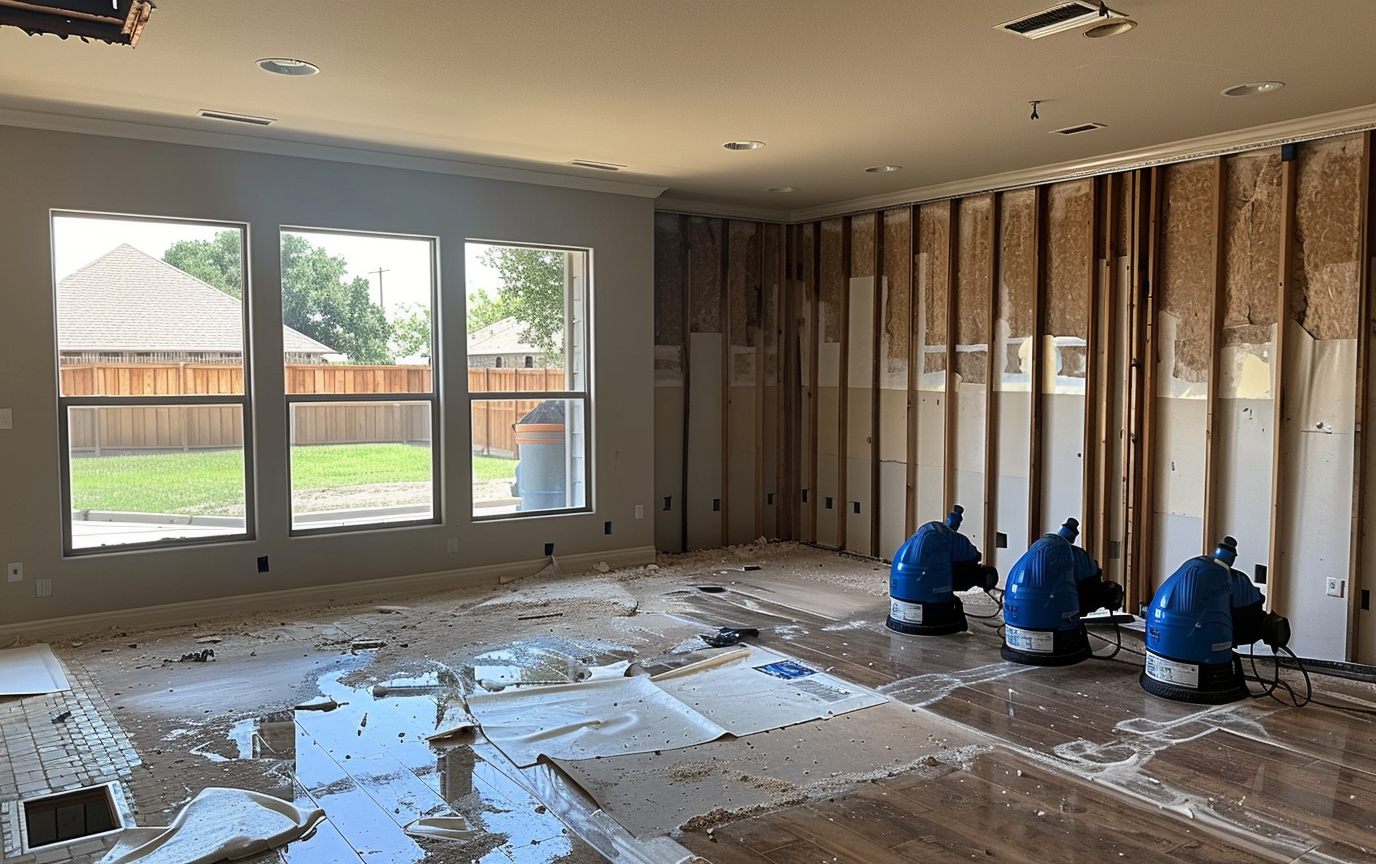
Water inside a wall is the leak you find last. It runs down the back of the drywall, soaks the bottom plate and insulation, and wicks up the gypsum, all out of sight. By the time it shows on the painted side, the wall has usually been wet for days or weeks. This guide covers the early signs, the usual sources in Kyle homes and what happens when a restoration company opens the wall.
Early Signs
- Paint bubbling or peeling low on a wall or around a fixture
- Soft or swollen baseboards, especially MDF, which swells easily
- A musty or damp smell in one room or closet
- Stains spreading up from the floor or down from a corner
- Warped trim around a door near a bathroom or laundry room
- Loose tile or failing grout on a shower wall
- Higher water bills with no visible leak
Where It Usually Comes From
| Source | Where it shows |
|---|---|
| Shower valve or supply behind the tile | The wall on the other side of the shower, or the ceiling below |
| Vanity and sink supply lines | The wall behind and beside the vanity |
| Washer box (the supply valves behind the washer) | The laundry wall and the floor beside it |
| Ice-maker line behind the fridge | The wall and floor behind the refrigerator |
| Slab leak rising into wall bottoms | Interior walls along the slab |
| Window or exterior wall leaks in wind-driven rain | Below windows on outside walls |
| AC condensate or water heater lines in the wall | Near the air handler closet or attic access |
How Walls Get Checked
A restoration company starts with readings: a pinless meter scans the drywall surface, and pin meters or readings behind the baseboard go deeper. A thermal camera can show cooler areas where water is evaporating. The readings show how high and how far the water went, which decides what has to be opened.
Bubbling paint or a soft baseboard?
Get the water damage assessed: (737) 265-3450.
Call (737) 265-3450Dry in Place or Open Up?
| Situation | Usual approach |
|---|---|
| Clean water, found early, drywall still firm | Drying in place, sometimes through small holes behind the baseboard |
| Drywall soaked, soft or wet for days | A strip cut from the bottom (often 1 to 2 feet) so the cavity can dry |
| Insulation in an exterior wall soaked | Insulation removed; cavity dried |
| Dirty or outside water | Removal above the water line; the cavity cleaned |
Cutting a strip off the bottom is often less disruptive than it sounds. It lets air reach the framing, and the patch is easy to hide behind new baseboard.
Why Leaving It Is a Bad Idea
A wall that stays wet keeps the framing and bottom plate damp, softens drywall and lets moisture spread to the next room. In a humid Texas summer, a wet cavity can start to smell musty. Drying it properly, with readings, is what makes the repair last.
The Repair
Once readings confirm the framing and the remaining drywall are dry: new drywall where it was cut, tape, texture matched to the wall, primer and paint, new baseboard and caulk. If the leak was a fixture, the fixture is repaired first. More: walls, drywall & floors.
Exterior Walls and Wind-Driven Rain
Not all water inside walls comes from plumbing. In Central Texas storms, wind drives rain sideways into gaps around windows, where siding meets brick, and through cracked caulk at doors. That water runs down inside the wall and shows up low on the inside, often below a window. If a stain appears only after storms, an exterior opening is the likelier source.
Walls Shared With the Garage
In many Kyle homes, the garage shares a wall with the laundry room, kitchen or a bedroom. Water from a garage water heater, a washer on the other side, or storm water under the garage door can wick into that wall from the bottom. Readings along the garage wall are part of checking any nearby leak.
Questions
How can I tell if there's water inside a wall?
Bubbling paint, a soft baseboard, a musty smell or a rising water bill are the usual clues. A moisture meter confirms it.
Does a wet wall always have to be opened?
No. Clean water caught early can often be dried in place. Soaked drywall or dirty water usually means cutting the bottom section out.
What does drywall water damage repair cost?
It depends on how much was opened, how long drying took and how much finish work is needed. See what water damage repair costs depend on.
Around Kyle
Shower-wall and laundry-wall leaks are common calls in Kensington Trails, Historic Downtown Kyle and Lockhart.
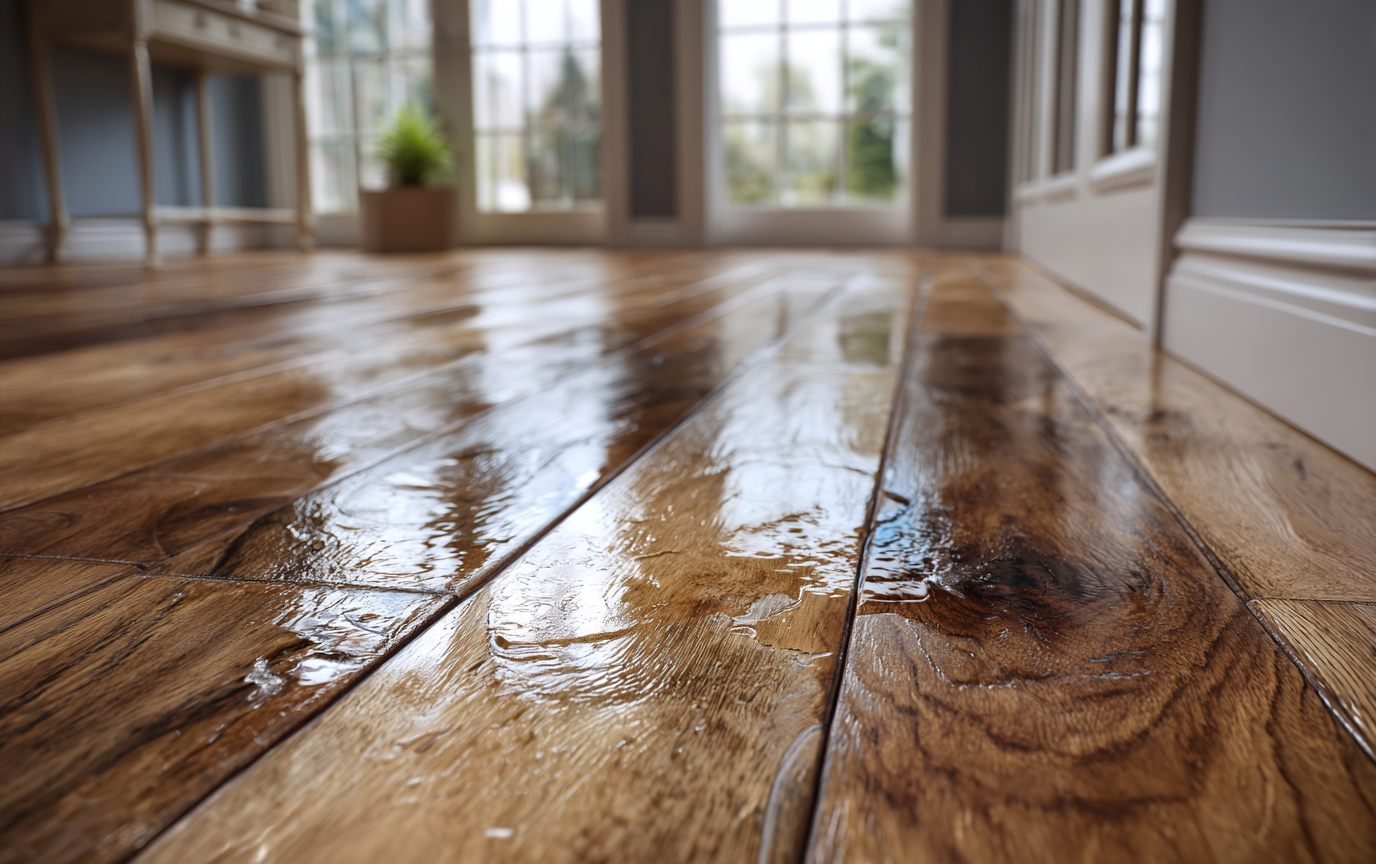
Hardwood, Laminate and Carpet After a Leak
What usually stays, what goes, and why the slab matters.
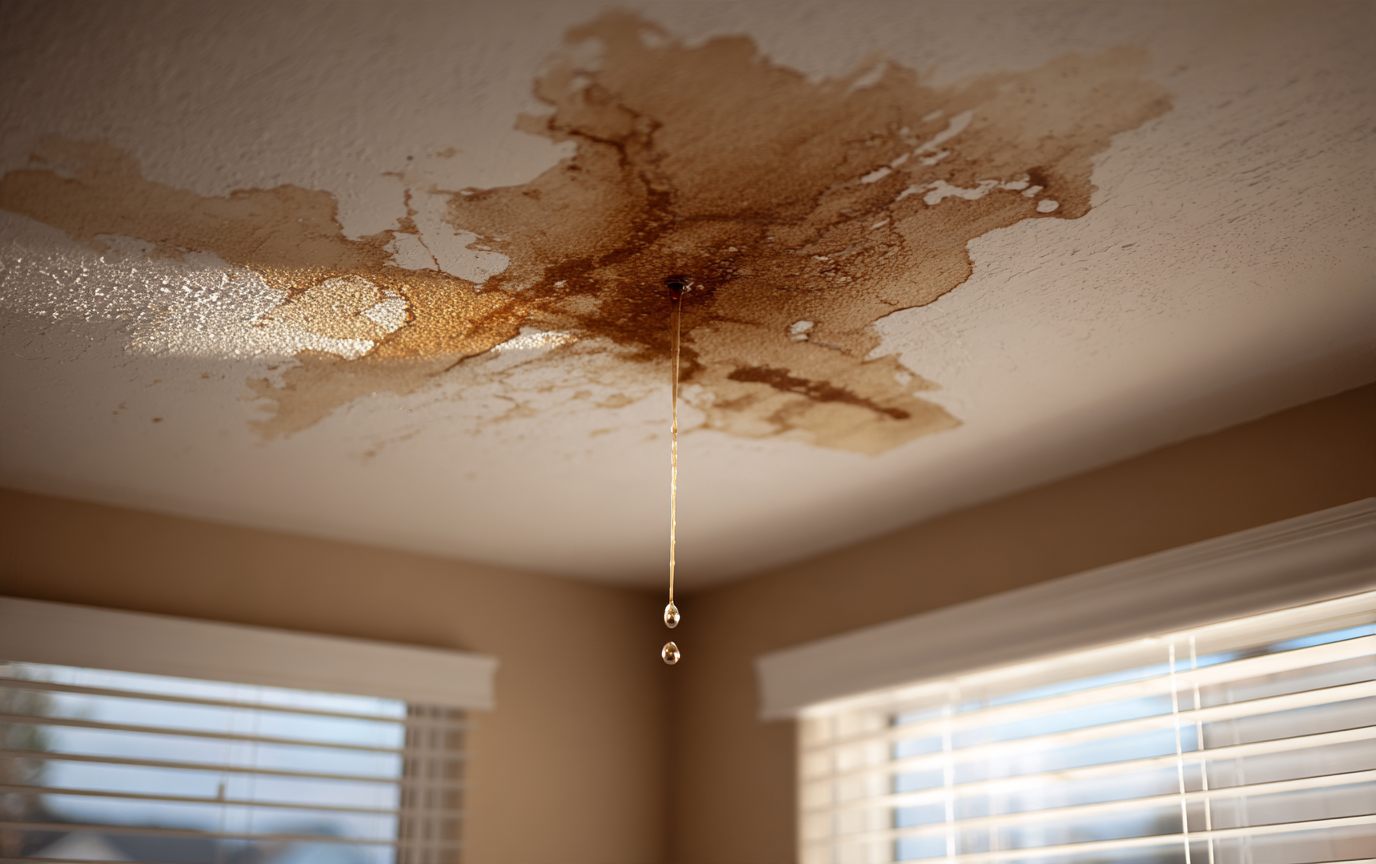
Water Leaking From the Ceiling: What It Usually Means
The four usual sources, and how to tell them apart.